Kyle Boggs is the author of Recreational Colonialism and the Rhetorical Landscapes of The Outdoors and is associate professor of rhetoric in the Department of Writing Studies at Boise State University. He is also the publisher of the Writing for Change Journal.
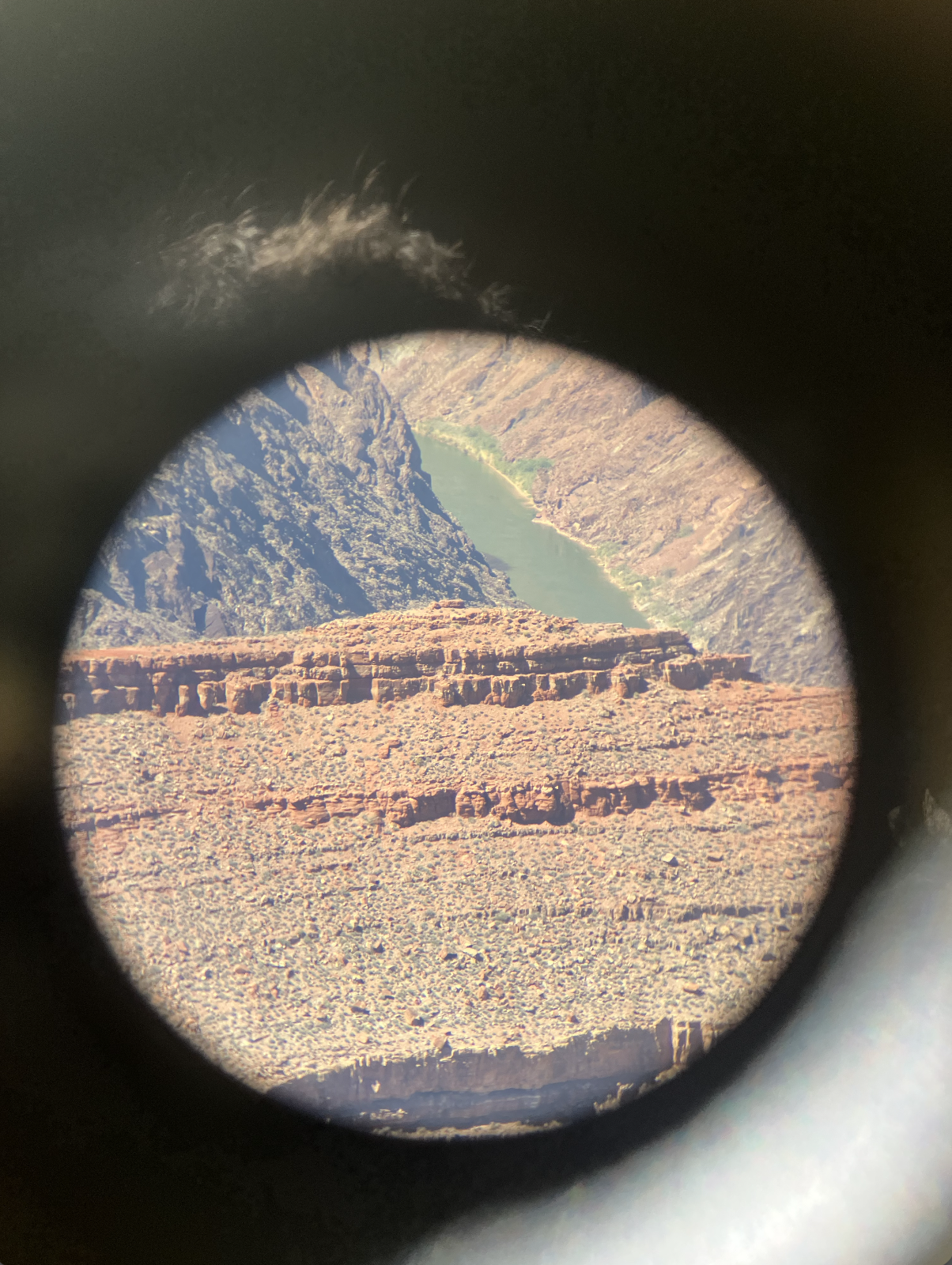
Photograph by Kyle Boggs
Returning Public Lands To Indigenous Peoples
By Kyle Boggs
To those who love the vast landscapes we call “public lands,”
There is a lie we tell ourselves about these places—forests that stretch as far as the eye can see, veined with wild rivers and deep canyons, endless expanses of land that remind us of our inexorable connection to the larger mysteries of the universe. We call them “ours.” We speak of them as a shared inheritance, protected for the benefit of all. And many of us feel a deep, genuine responsibility toward them.
But we should begin with a harder truth: the phrase public lands has always been a euphemism for stolen Indigenous lands. While the lie has convinced many of us that these lands were empty and unclaimed, they were systematically taken—through violence and literally hundreds of broken treaties—from Indigenous nations who had lived with and cared for the land for millennia.
Any conversation about protecting these lands that ignores that history helps to sustain the lie. Today we’re being fed another lie.
Recent reporting describes sweeping changes coming to the U.S. Forest Service. They’re calling it a restructure. But that’s not what this is. It is the latest decision meant to dismantle the Forest Service as we know it, a slow walk toward privatization and the architects are hoping we won’t notice what is happening. Plans include relocating the agency’s headquarters, shuttering regional offices, and consolidating or eliminating research programs that have long informed land management decisions—57 of 77 research stations closed, all regional offices closed, decades of institutional knowledge lost. These moves will disrupt experienced staff and weaken scientific capacity—shutting down research, some of which span decades, is a loss that can’t be overstated. Ultimately, these decisions reduce oversight of forests, which span nearly 200 million acres, oversight that is already stretched thin.
The consequences are not abstract. Reduced staffing and expertise have already been linked to declines in wildfire mitigation and trail maintenance, raising concerns about ecosystem health, public safety, and access. Other policy shifts have accelerated logging, mining, and energy development, often with less public input than in the past. The so-called Big Beautiful Bill, for example, mandates new logging quotas meant to boost timber sales by 75%.
If you care about public lands, this should trouble you. But when we zoom out and consider the years leading up to this, which have been characterized by budget cuts, worker layoffs, and the dismantling of environmental protection laws, the situation is actually much worse. What we’re witnessing is part of a long-term plan to privatize public lands.
We’re seeing the same strategy played out in other areas of government, such as the dismantling of the Department of Education. In either case, the grift is the same: incrementally weaken its ability to carry out its mission so that overtime it becomes so dysfunctional that there is less pushback when it is privatized, which was actually the goal all along. Break it and take it.
If this seems alarmist, let’s look at more of the details. The Forest Service headquarters is moving from D.C. to Salt Lake City, Utah, which is literally the ideological center of the anti-public lands movement going back to the Sage Brush Rebellion. Remember when Obama established Bears Ears National Monument, protecting 100,000+ Indigenous cultural sites, and in his first year in office Trump reduced the size of the monument by 85%? That’s because it’s in goddamn Utah. This is a place where the anti-public lands movement, equipped with a well-funded PR machine, wields immense political power. As I write this, the State of Utah is suing the federal government to seize 18.5 million acres of public lands. Politicians like Mike Lee have built their careers off trying to dismantle the Wilderness Act, seize control over National Park land, and sell off BLM lands to developers.
When the offices and research stations are closed, they will be replaced by fifteen politically appointed “state directors,” installed in specific state capitals that all have one thing in common: their friendly relationships to extraction industries like logging and mining.
This is all in addition to other attacks: the near total dismantling of the National Environmental Policy Act (NEPA), which has been happening overtime, in addition to the gutting of the Environmental Protection Agency (EPA). More recently, the Trump administration has sought to rescind the Roadless Rule. It’s fall could open 45 million acres of forests across the country to logging and other forms of extraction, and the administration isn’t even planning on holding public hearings about the changes. And then there is the recently announced changes to hunting laws in national parks, which not only threaten the balance of already precarious wildlife populations, but could potentially lead to dangerous and chaotic scenarios.
For more than a century, federal agencies like the Forest Service have attempted to balance competing demands—conservation, extraction, recreation—across landscapes of immense ecological and cultural significance. At times, they have protected these lands. At other times, they have facilitated their degradation. But their authority ultimately rests on the same historical dispossession that created the lie of “public lands” to begin with. Most Americans do not want to see their shared public lands privatized and turned into a cash machine for developers and industry, which would happen under state control. And neither can the federal government—with its radical swings in leadership, it’s inconsistent and contradictory policy—be trusted to manage these lands.
Clearly the current system is not structurally capable of protecting what we claim to value. The current crisis exposes how vulnerable these systems are to abrupt policy shifts and political agendas. We cannot trust the federal government and we cannot trust the states.
But there is another path—one that is actually not new at all—one that is a return to how these lands were managed successfully for thousands of years with a consistent vision of ecological integrity for generations to come. Through practices like cultural burning, and reciprocal stewardship, and a deep understanding of the needs of the land, Indigenous peoples maintained biodiversity, reduced catastrophic wildfire risk, and sustained complex, thriving landscapes; it long past time to return all so-called public lands to Indigenous peoples.
Like the movement for reparations for African Americans, the tangible outcomes from the Landback movement for Indigenous peoples may look like a lot of different things, one of these paths includes giving tribal nations control over how their ancestral lands are managed. This is not a new idea. The case for returning public lands to Indigenous peoples have been made many times over, including recently by Joe Whittle. The actual “how” of how this would happen is no doubt complicated, and could take on many forms that include regional differences, partnerships extended to folks outside of Indigenous communities such as scientists and others willing to use their expertise and academic training in ways that serve the long term vision articulated by tribal communities. Logistics may be even stickier than that. Indigenous peoples are not a monolith. Even within tribal communities, there is often a spectrum of thought which dictate priorities and balance. Tribal governments, like all governments, may not fully and accurately represent the will of the people. Such complications would obviously require careful and well-planned processes aimed at problem-solving, centered on shared goals, defined by a coalition of a diverse spectrum of tribal leadership. But it is entirely possible, and given the direction land management is headed now, a new vision is necessary.
Indigenous governance offers a different framework—one rooted in long-term responsibility rather than short-term extraction, in relationship rather than ownership. And today, there is recognition that returning land to Indigenous stewardship can lead to better ecological outcomes.
So if you are someone who values public lands—who hikes, runs, bikes, fishes, hunts, climbs, or simply enjoys being in these lands—this is a moment to expand your commitments. This move will not happen overnight, and certainly not under this presidential administration. But the present circumstances should not define our vision for what is possible; it is important to begin those conversations now. Rethinking how we define public lands is an opportunity to rethink larger ideas like ownership, authority, and responsibility. Infusing dignity and respect into the landscapes we love and the communities that have thousands of years of ancestral knowledge is the best path toward preserving these lands for generations to come.