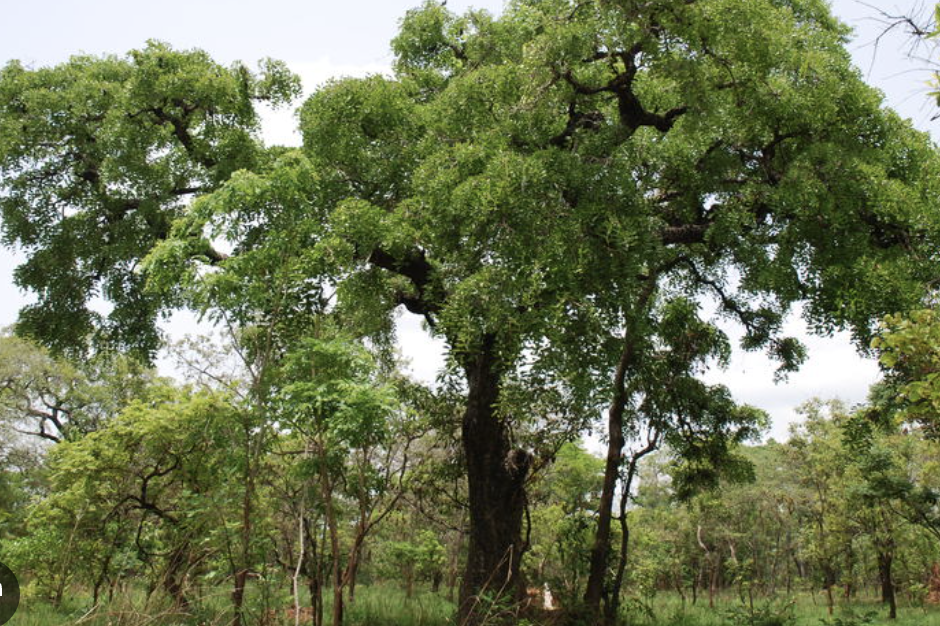
Congo: Afzelia (Afzelia africana)
The Introduction
Eva Anderson, Bailey Perkins, Mairi Young
The decision to leave one’s country of origin is extremely difficult: leaving friends, family, personal belongings, a sense of community, and more importantly, home. The “old life” once lived is no more and the new chapter is unknown. The unknown can be frightening, in a new country, not knowing the language, and cultural differences. Many refugees face these difficult decisions of living in a wartorn country and fearing persecution, or uprooting their lives to pursue a better life. None of these decisions are ideal, with many developed countries being highly selective on who they “take” and from what regions.
People leave their country of origin for a multitude of reasons. The 1951 Convention defines a refugee as someone who is "owing to well-founded fear of being persecuted for reasons of race, religion, nationality, membership of a particular social group or political opinion, is outside the country of [their] nationality and is unable or is unwilling to avail [themself] of the protection of that country; or who, not having a nationality and being outside the country of [their] former habitual residence, is unable or unwilling to return to it." When fleeing, many refugees' first point of contact is the neighboring country. However, many of these neighboring countries are one step away from having their own crisis. War has led to most of history's refugees, lasting many years and leading to mass devastation.
Hunger and famine is another major factor for fleeing one's country. There are an estimated 20 million people from four North African and Middle Eastern countries that have been displaced because of famine and drought. Another 17 million displaced persons across the African continent, there could be other reasons for leaving one's country but hunger, drought and famine are affecting many underdeveloped countries. There are a combination of reasons for why a person would leave their country of origin, but the decision will always be difficult. This is seen in the case of mass amounts of people leaving the Democratic Republic of Congo because of war and other factors.
For the past few decades, the DRC has been enduring war. The conflict is linked to the 1994 Rwandan genocide, during which Hutu extremists murdered around 800,000 Tutsis and other Hutus that refused to join their cause. This forced nearly two million Rwandans to seek refuge in their neighboring country, the DRC. A small portion of them were Hutu extremists that started violent militias (Council of Foreign Relations). This led to the first Congo War, when in 1996 Rwanda and Uganda attacked the DRC in an attempt to eliminate the remaining perpetrators of the massacre (Eastern Congo Initiative). The war ended in their favor. Following this, Laurent-Desire Kabila, a Congolese rebel, was elected president of the DRC in 1997.
In 1998, the second war in Congo started due to hostile relations between Rwanda and Uganda. This led to the assassination of President Kabila. His son, Joseph Kabila, was elected as the new leader. Joseph worked with political officials in Rwanda and Uganda to enact peace agreements that eventually ended the second war. Unfortunately, these peace agreements haven’t been effective, as there is still brutality in the DRC. The Council of Foreign relations estimated that the ongoing conflict has led to six million deaths.
Our interviewee, M, came to the United States from the DRC with his family in 2023. Although he didn’t specify the circumstances under which they came, one can infer that the violence Congolese citizens endure has forced M to seek refuge in a different country. During the interview, he spoke about how the U.S is more peaceful.
“What are some of the big differences?” our translator, asked.
“There are a lot of differences. Here there is no war, but in Congo there are wars,” M replied, “...here, everything is good because there is peace. There is security and everyone is free to do whatever they want.”
M feels safer in the U.S, but there are still struggles. He described having trouble finding a job that will support him and his five children. Currently, he works as a janitor at a high school. This wasn’t the job he was trained for, but M states that work is work. Still, he hopes to find an occupation that pertains to his field of expertise.
“I studied as a counselor. I also studied as a leader,” M explained, “Not much is open for me yet, but I would like to be at school to continue my studies, I would like to study English counseling. Yes, that’s my field.”
When coming to the U.S, many refugees have issues acquiring employment even if they meet all of the job requirements or are highly educated. This is because it’s difficult to transfer skills into the U.S job market, and there’s often a language barrier. Finding a job becomes more troubling for refugees, as they are met with a six month time limit upon their arrival. Fortunately, there are resettlement programs to assist refugees in their job search. This does not automatically solve the employment disparity refugees face, but connecting newcomers to these resources may help.
Another question we had for M is how his identity has changed since migrating to the U.S. According to the United Nations Refugee Agency, there are over 6 million Congolese people who are displaced. Most of them seek asylum within Africa; very few come to the U.S. In the case of M, he is one of 5,000 Congolese refugees that arrived in the states. One can imagine that this would cause a sense of displacement. Contrary to what we were expecting, M stated that “...all my identities are the same. Nothing has changed.”
It was enlightening to hear his answer. Many refugees undergo a change in identity when coming to a different country, due to unfamiliar surroundings and pressure to assimilate (National Library of Medicine). This is also influenced by the labels that Westerners place on refugees: migrant, displaced, asylum seeker. Seeing past these labels is one way of helping refugees adjust to life in a different country. M’s answer also highlighted how every story is different. Therefore, it’s wrong to make assumptions of what tribulations a person has been through.
M’s story reminds us of the triumphs and tallies that refugees face as well as the opportunities that await. Everyone's story has importance and is unique to the storyteller but is especially important to hear stories of resilience. It is especially important for citizens living in developed countries to hear these stories. People get stuck in their lives and do not think much past the menial tasks that are in front of them. As human beings we are so concerned with our own lives, that we give very little thought about the broader community. Hearing these stories not only gives the people who are telling them a voice, it puts the triumphs in perspective for the rest of us. These stories give us an opportunity to not only understand, but to connect with others. This connection is extremely important and will hopefully lead to action or a greater availability of resources for refugees.
There are currently 350 local affiliates within the United States to help refugees and four agencies currently in Idaho. If you are located within the Boise area, the Agency for New Americans and International Rescue Committee is within the area. There are two more remaining agencies within Idaho, Ukrainian Welcome Center in Nampa, and College of Southern Idaho Refugee Program in Idaho Falls. Idaho alone welcomes about 1,000 refugees per year and half of that population is from Congo. Resettlement agencies help meet the family or individuals direct needs such as rent, food, clothing, ect. This help is offered only for the first 90 days. They are offered a private sponsor for the first 90 days as well. For those who currently live in Boise, there is the International Rescue Committee which focuses on establishing education, economic well being, health, empowerment, and safety for the refugee community. They also help connect United States citizens to refugees if they wish to get involved. However, we found M’s best piece of advice was “if you need help, call 9-1-1”.
The introduction into a new country is often a scary and stressful process, although a new feeling of safety and security is yet to be established. There are many resources which aid refugees within the first 90 days, although we need to have a stronger outreach program after this process. There are many complications when beginning a new life in a new country, such as professional skills being non-transferable, conversational barriers, wages not paying enough to support their families, and great feelings of displacement. After establishing themselves in a new country, refugees still deal with mental health consequences from the previous state of their country. With over 1,000 refugees introduced to Idaho each year, there is a need for a new outreach program to aid this growing population, as the previous year of refugees are still hurting.
Works Cited
Bhugra, Dinesh, and Matthew A. Becker. “Migration, Cultural Bereavement and Cultural Identity.” World Psychiatry, vol. 4, 2005, pp. 18-24.
“Boise, ID.” The IRC.
Eastern Congo Initiative. “History of the conflict.” Eastern Congo Initiative, 2024.
Lu, Ying. “Exiles Invisible Barriers in the U.S. Job Market.” The New Americans,
Rueckert, Phineas. “5 of the Biggest Reasons Why People Become Refugees.” Global Citizen, 14 August 2017.
The United Nations Refugee Agency. “The 1951 Refugee Convention.” UNHCR, 2024.
“Resettlement in Idaho.” Idaho Office for Refugees.