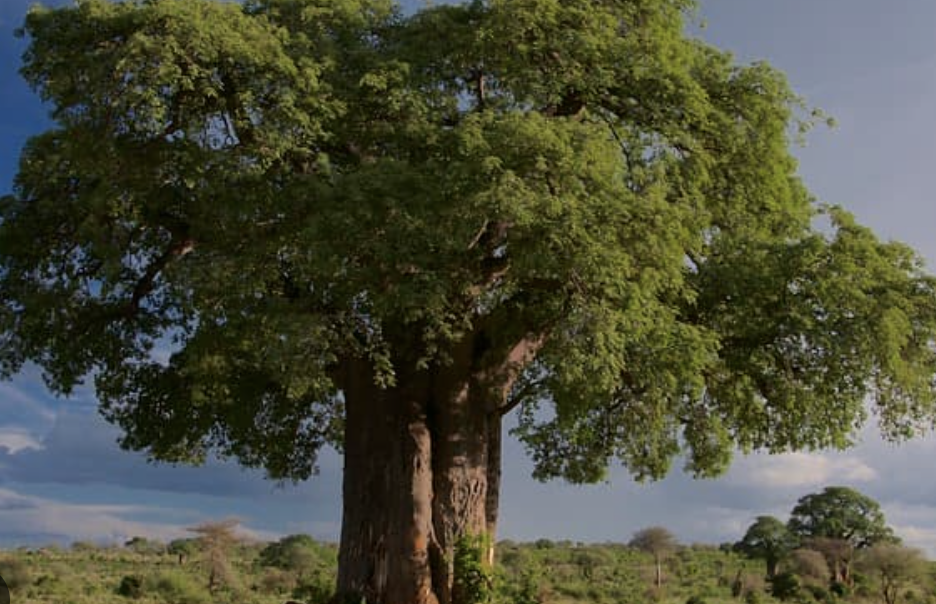
Congo: African Baobab
Esto Perpetua: Idaho’s Roots
Laci Erich and Abigail Jenkins
Idaho Potatoes
The rhizome, according to Britannica, is the underground plant stem that can produce the shoot and root systems of a new plant. It is horizontal in shape and stores starches and proteins that keep the plant alive, even during an unfavorable season. One such plant that has a rhizome is the potato. Idaho is known as the potato state, producing about ⅓ of the United States’ potatoes.
Without rhizomes, Idaho’s potatoes wouldn’t stand a chance. It takes a strong root system to keep potatoes alive and thriving. But, perhaps more importantly, it takes new roots for potatoes to remain alive and thriving. There can’t be more potatoes if there isn’t new growth.
Increase in Population
As a refugee resettlement community, Boise has also become the new home to over 30,000 refugees since 1975, which is just a drop in the bucket compared with recent arrivals from within the States in 2022. Yet there seems to be a consistent narrative among some that refugees are more villainous than other arrivals, here to take away jobs and livelihoods. However, this couldn’t be further from the truth, rooted in false narratives that scapegoat a tiny fraction of the population. Those who arrive here because of their refugee status are our neighbors, our friends, our community; how often do we recognize the similarities among our differences and the immense resiliency and bravery many resettled individuals have? It takes guts to uproot one’s life, even in hope for a better future.
Refugees Contribute to Idaho’s Economy and Community
Without new roots, potatoes wouldn’t grow. Perhaps it’s time to reframe recent arrivals, both refugees and nonrefugees, as necessary to the life of the potato state. By bringing in fresh perspectives, growing businesses, and a love for all things potato, new Idahoans from diverse backgrounds contribute in profound ways. Immigrants to Idaho contribute $2.8 billion to Idaho’s economy every year, and their presence benefits locals. How? It leads to Idahoans getting better-paid jobs, increases international trade and investment, and increases entrepreneurship. Immigrants’ economic output is greater than their share of the population.
V
Many who have grown up or currently live in Boise may not realize the extent of the resettlement process. V relocated to Boise five years ago from Brazzaville, the capital of the Republic of Congo, not to be confused with the Democratic Republic of Congo. V describes Brazzaville, as
“a beautiful city with a diversity of cultures, traditions, and tribes. The city is full of ambiance brought by citizens from different tribes, immigrants from different African countries, and tourists. It is a city full of energy and ambiance where music plays in every corner from sunrise to sunset. People are friendly and always willing to promote their culture. It is a meeting point.”
V did three years of college as a Logistics and Transportation Management student in the Republic of Congo before moving to Boise. After completing the Intensive English Program and attending the College of Western Idaho, she transferred to Boise State University to study Supply Chain Management. V recently competed in the iFIT Supply Chain Management Case Competition at Utah State University this past March. She presented a strategic plan to improve supply chains post-pandemic and met with executives. V also tutors at College of Western Idaho. Her story is like those of many hard-working individuals who have had the courage to uproot their whole lives in search of better opportunities and quality of life for themselves and their families.
The United States is home to more international migrants than any other country and welcomes more individuals than the next top four countries—Germany, Saudi Arabia, Russia and the United Kingdom—combined. However, this distinction does not mean that the process of coming to the States is easy. While the number of individuals who qualify for the process is high, very few end up resettled. One in every seventy-four people worldwide are displaced, according to the United Nations High Commissioner for Refugees (UNHCR) in 2022. One-third of them qualify for refugee status—but less than 1% are resettled. To gain refugee status and become resettled, cases are self-referred or identified through a handful of avenues - the UNHCR, the embassy, or a non-governmental organization.
Self-Identification
The UNHCR, according to their website, “identifies people who are most at risk of serious harm in the country where they are registered, usually because of threats to their life, freedom, physical safety, or other serious violations of human rights.” The best way for families to request identification is to contact the nearest UNHCR office and describe their situation to request resettlement.
The United States Embassy is another way in which one may gain refugee status. Similar to the UNHCR, individuals must describe, preferably in writing, the situation they find themselves in and why they are seeking asylum or resettlement. The United States Citizenship and Immigration Services (USCIS) then reviews the application to determine if the applicant qualifies for refugee status. If the application passes, the USCIS puts the individual or family in contact with organizations in the United States to provide support or sponsorship throughout the refugee process.
After Gaining “Refugee Status”
Once an individual or family is identified as eligible for refugee status, a series of interviews, security checks, and medical exams takes place. Background checks and organization affiliation are major factors that the USCIS considers when approving people to come to America. The process scrutinizes every aspect of an individual and provides little to no leeway when it comes to anything that the government is unsure of. Unless the refugee applicant is in a situation where their life is at stake, this step may take several weeks. If the individual receives confirmation of their refugee status from the USCIS, the government connects the refugee with a resettlement agency in the United States. The resettlement agency decides a reception site and the individual or family travels to the United States. The reception state or organization provides airport assistance, immediate needs, English language learning and assistive services, including social security, SNAP, and temporary cash assistance to support these new neighbors.
Local Resettlement
V’s family applied for refugee status through the IRC and were supported through the whole process. In V and her family’s case, a non-governmental organization, the International Rescue Committee (IRC), supported their identification as refugees and helped the family settle in Idaho. She says “We have been very well received by the community and also by agencies like [the] IRC who have accompanied us from day one … It's nice to know there were such people because we were worried a lot before we got here how things were going to go…there were questions every day” (V). Keeping true to their mission, the Boise branch of the IRC has resettled more than 5,000 refugees since its inception in 2005. “I will not say that my family chose to move here,” V explains. “Rather, the resettlement program that we had applied to decided to move us here” (V). Because they did not have family or friends in the United States already, the IRC decided to send them to Boise, Idaho.
What’s in the Gem State?
Idaho has consistently ranked in the top ten as a state for resettlement. Despite not being able to choose her resettlement location, V was impressed by the welcome that she received into her new community, which included members of the refugee community, and felt like her new neighbors truly cared for her.
It was her community that supported her academic goals, pushed her to achieve great things, and is the inspiration for many of her accomplishments. Now she supports new refugees as an English tutor at the College of Western Idaho.
“It feels good to know that they are not alone,” she says.
Oftentimes, Idahoans find themselves living in their own little bubble. In this time of growth, we have forgotten to get to know our newest neighbors, cultivate community, and provide support and care to one another. To keep growing potatoes, we need to grow new roots. The recent growth in Idaho’s population is an invitation to all Idahoans to recognize what makes Idaho the Gem state.
Rooted in Idaho
Living with community in mind is more commonly found in countries outside of the US and is a way of life that many in America should take the time to learn about and apply to their own lives. Understanding the appreciation techniques and ways of intentional communication from other cultures is a strong step in creating a more welcoming community and one where new neighbors feel the love and appreciation that V and her family did when they arrived in Boise.
Without new roots, we might forget the community that makes us strong. The influx of new Idahoans, both refugee and nonrefugee, is a reminder that Idaho is something special. It takes new roots for potatoes to remain alive and thriving; let’s recognize the potentiality of this new life infused in Idaho. This rhizomatic thinking will improve our entrepreneurial spirit, economy, and community.